Wetlands for wastewater treatment sludge
BE CIRCULAR, BE EFFECTIVE: STOP SENDING SLUDGE TO THE LANDFILL
Wetlands for wastewater treatment sludge
BE CIRCULAR, BE EFFECTIVE: STOP SENDING SLUDGE TO THE LANDFILL
Wetlands for wastewater treatment sludge
BE CIRCULAR, BE EFFECTIVE: STOP SENDING SLUDGE TO THE LANDFILL
WETLANDS COURSES


WETLANDS MINING
SIMPLICITY AND OPERATIONAL SAFETY FOR COMPLEX MINING WATERS

WETLANDS MINING
Passive treatment for turbidity and metal removal, and environmental compliance.
Treating mining wastewater is challenging for several reasons, among which we can highlight:
The high flow rates to be treated;
The geochemical complexity of water;
The high costs of active treatment solutions.
Choosing a treatment process that is technically robust, operationally simple, and economically advantageous is crucial for reducing environmental and business risks.
ETE Wetlands Mineração overcomes these challenges.
Constructed wetlands are being used worldwide for a wide variety of industrial waters, replacing active systems with sustainable and safe solutions for treating mining wastewater.
< 0.10 R$/m³
Reduced costs per cubic meter of treated water, without dependence on energy or chemical inputs.
100%
100% consolidated.
Wetlands for complex water systems are employed on all continents.
3,600,000 m²
It is the area of the world's largest wetland system.

Benefits generated by Wastewater Treatment Plant Wetlands Mining
SIMPLIFICATION
and operational safety
Natural and passive process;
Absence of complex assemblies;
No operator required;
Sporadic monitoring visits;
Resistance to fluctuations in effluent quality;
Final effluent is stable and within legal limits;
REDUCTION
costs operational
Independence from electromechanical equipment;
Independence from chemical products;
There is no mud to be disposed of;
RECOVERY
of resources and environmental quality
Creating green spaces that attract biodiversity;
Use of local materials for construction;
Zero greenhouse gas emissions;
Zero consumption of chemical reagents;
Valuing biodiversity;
Landscape integration with the surroundings;
See who already recognizes it. the value of the Wetlands Wastewater Treatment Plant


Landscape integration and environmental quality
Internationally established for industrial wastewater treatment, constructed wetlands technology offers advantages that align perfectly with the UN's 17 Sustainable Development Goals and Circular Economy concepts. These systems can receive raw sewage or effluents from other conventional technologies, delivering water suitable for reuse in a simple, safe, and economical way, while also being landscape-integrated with the surrounding environment.
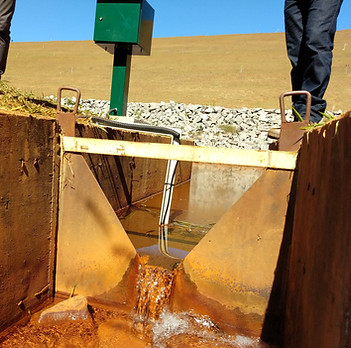
Photo: System designed by Constructed Wetlands for metal removal and control of acid drainage generated in a waste pile.
Endorsed worldwide

Os wetlands construídos são sistemas mundialmente reconhecidos por sua elevada eficiência, robustez, simplicidade operacional e pelos serviços ecossistêmicos que prestam.
Várias instituições chancelam o uso da tecnologia. Há pesquisas e sistemas em operação plena que comprovam a aplicabilidade dos wetlands para tratamento de águas inorgânicas.

Removal of metals and inorganic pollutants
For each type of water, a specific application engineering solution.
Based on the geochemical signature of the waters to be treated, constructed wetland reactors can be designed to favor the predominance of their respective pollutant removal pathways.
A clear distinction is the use of surface runoff wetlands for the oxidation of some groups of metals and the use of subsurface wetlands for the reduction of other metals.
Several biogeochemical mechanisms occur simultaneously, allowing for the removal of a wide range of elements.

For every need, an engineering solution.
To develop a wetland wastewater treatment plant for mining wastewater, it is necessary to understand in detail the water generation process and its characteristics. Based on these initial premises, a specific application engineering design is developed, ensuring perfect alignment between demand and solution.
Definition of the flow rates to be treated.

Definition of water characteristics

Defining the treatment objective
Assessment of required and available areas


